A Walk Through Houston County History At The Old Train Depot
By Greg Ritchie
Messenger Reporter
CROCKETT — The Houston County Museum does not preserve local history in just one form.
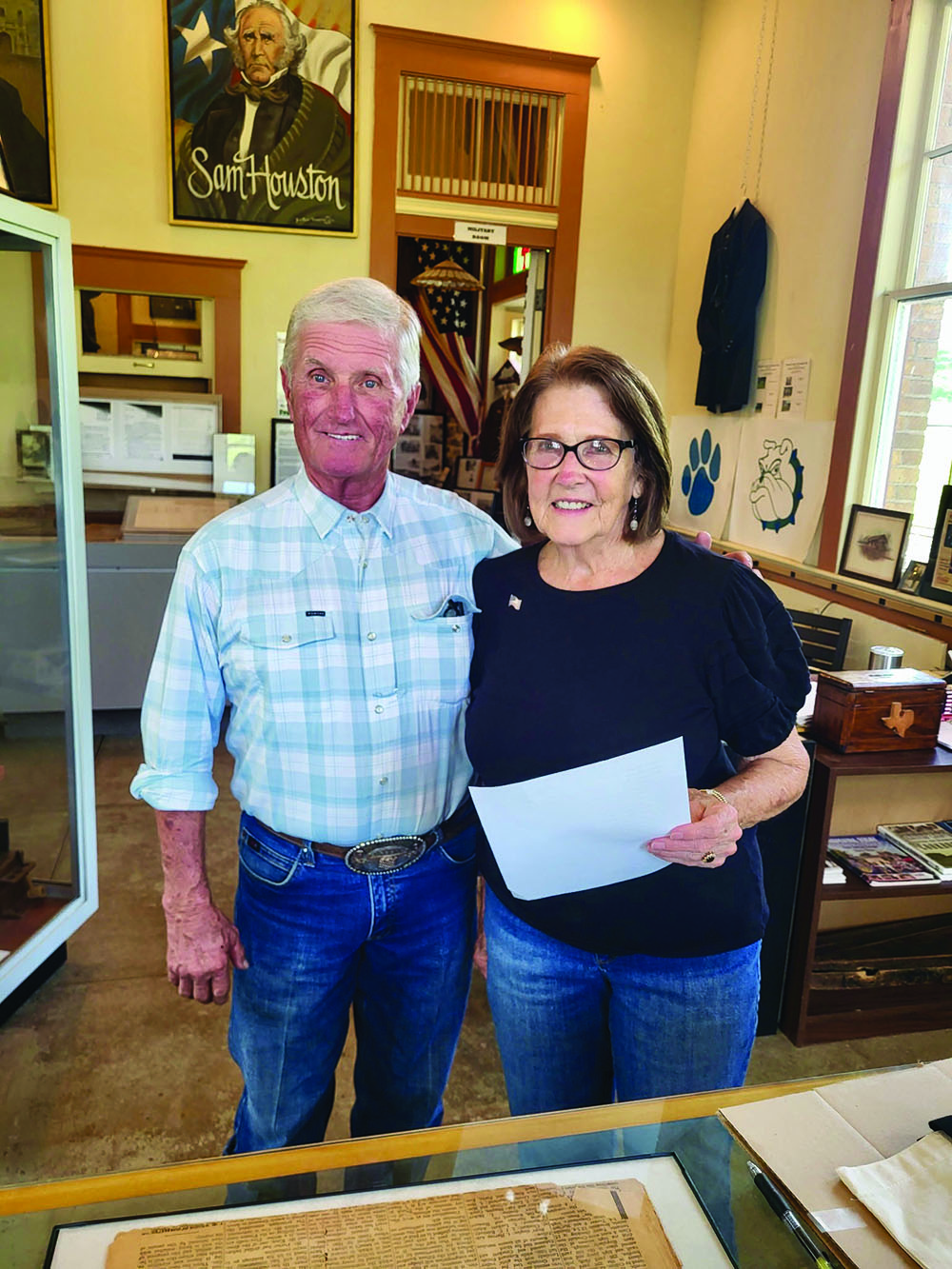
Inside the old train depot at 101 1st St. in Crockett, visitors can find military artifacts, railroad equipment, family records, handmade dresses, historic photographs, old business signs, a fire engine, a telephone booth and stories reaching back through generations of Houston County life.
Longtime volunteer Patsy Stokes said each room offers a different way to understand the people and communities that shaped the county.
“The first room shows what life was like for ladies way back,” Stokes said. “We’ve got the shoes that are real tiny and pointy-toed, and we have instruments used to straighten or curl their hair.”
That room also includes two handmade dresses from the Tadmor community, a feather mattress and displays connected to local families and figures.
One exhibit includes material about Davy Crockett, including what Stokes described as the last letter he wrote to his family.
The museum also preserves the history of local medicine and genealogy. A display about Dr. M.A. Thomas tells visitors about the Crockett physician who delivered more than 5,000 babies in homes during his career.
The museum’s genealogy books are frequently used by people researching their families.
“A lot of people come over here that are doing ancestry and look through these books and get a date,” Stokes said.
She recalled one visitor who found information showing that a family had twins, even though only one of the children had been registered.
Military history is Stokes’ favorite part of the museum.
“That’s my favorite room, the military room we call it,” she said.
The room includes photographs, uniforms, wartime stories and artifacts connected to local veterans. Among the displays is information about Robert English, the fiancé of Eliza Bishop’s granddaughter, who served as the pilot of a B-17 Flying Fortress.
English’s plane was shot down on its way to Germany, and the men who survived the crash were taken to prisoner-of-war camps.
Stokes said Bishop never forgave the Germans for English’s death.
Another unusual artifact in the military room is a swastika flag that was given to Bishop after World War II. Stokes said Bishop treated the flag as a symbol of the hatred and destruction she associated with the war.
“Somebody gave it to Eliza when the war was over, and she taped it near her front door and made people brush their feet on it,” Stokes said.
The flag eventually came to the museum, where it remained on the floor until former Crockett City Administrator Ron Duncan, a retired military member, placed it in a frame.
“Ron Duncan scraped it up off the floor and put it in a frame and said, ‘Here, Missy, here’s your swastika,’” Stokes recalled.
The military room also includes material about local men who served in World War II, including a Crockett man connected to the Doolittle Raiders. Stokes said the collection includes letters written by three men before they were executed by Japanese forces.
The stories are difficult, but Stokes said they are part of the county’s history and deserve to be preserved.
Other displays focus on industries and communities that helped build Houston County. In the room dedicated to a coal mine that operated between Crockett and Lovelady, visitors can see furniture from the mine’s pay office.
The mine operated during the 1920s and early 1930s before closing in 1932. Stokes said the men who established the mine traveled to Galveston to recruit immigrants to work there, helping explain some of the European names that remain connected to the area.
The museum also includes a display about the Eden’s-Madden massacre, a historic event that took place outside Grapeland.
Railroad history is naturally another important part of a museum housed in an old depot.
“We have the room we call the train room,” Stokes said. “It’s got the telegraph and then the switch to switch tracks for the trains.”
The collection includes railroad magazines, a set of china from a dining car and a baggage cart loaded with tools and equipment.
Stokes said volunteers would like to unload the baggage cart so visitors can see it more clearly as a piece of railroad equipment instead of simply viewing it as a table.
The museum’s collection also includes a Seagraves fire engine, which Stokes said is one of the most popular exhibits.
“People love it,” she said. “I think that’s one of the favorite things they see here.”
Visitors can also see what Stokes described as Crockett’s first telephone booth, a John Deere tractor, a side saddle, old tools and equipment, and a permanent-wave machine once used to style women’s hair.
The machine required women to sit beneath an electric device similar to a large hair dryer.
“A lot of ladies got their hair burned up, too,” Stokes said.
The museum preserves pieces of local businesses and entertainment venues as well. Neon signs from the Royal Restaurant, the Rio Drive-In Theater and Purdue’s Jewelry Store are part of the collection.
Stokes said the museum’s value is not limited to the objects themselves. The exhibits often lead visitors back to family stories and memories they had not heard in years.
She recently watched visitors from Madisonville find names connected to their own community in an old record documenting sales of intoxicating liquor.
Those moments are part of what keeps the museum meaningful, Stokes said. A collection of old objects becomes more valuable when visitors recognize a name, remember a relative or discover a piece of their own family history.
The Houston County Museum is open Fridays and Saturdays from 11 a.m. to 3 p.m. at 101 1st St. in Crockett.
For Stokes, the museum is a place where the county’s history remains available to anyone willing to walk through the door.
“You may not want to put this in there,” she told me during the interview, before describing another local story, “but Dorothy can tell you so much more.”
That may be true. But even a single visit with Stokes makes clear that the old depot contains far more history than most people could absorb in one afternoon.
Greg Ritchie can be reached at [email protected]