Flock Cameras Draw Attention, Questions in Houston County

By Greg Ritchie
Messenger Reporter
HOUSTON COUNTY — A report that a Flock license-plate camera was knocked down along Highway 21 East has brought a national debate over surveillance technology to Houston County.
The report was shared on social media by Crockett Insider. The Messenger has not independently confirmed when the camera was damaged, who was responsible or whether it has been repaired or replaced.
The report also raised questions about who owns the cameras positioned around Crockett and how local law enforcement can use the information they collect.
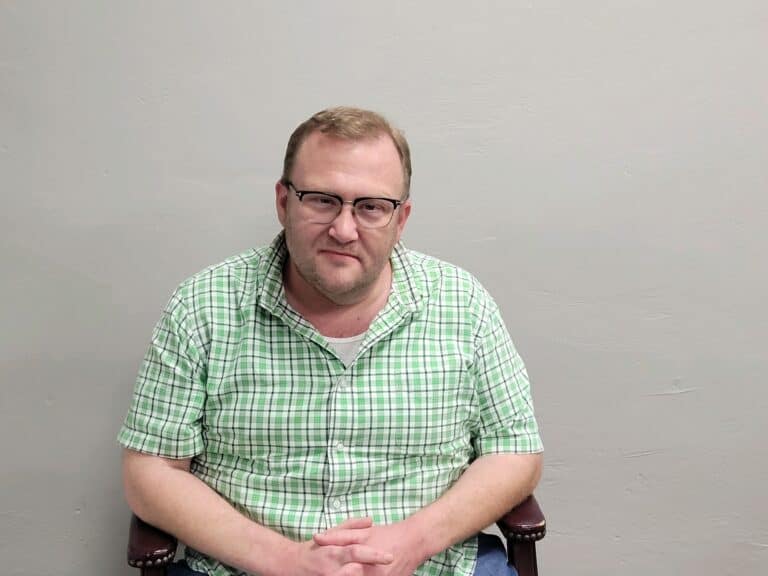
Sheriff Zak Benge said the cameras are not owned by Houston County or the Houston County Sheriff’s Office.
“There are no county-owned Flock cameras in Houston County,” Benge said. “Our office has not asked for, nor sought out, any grants or funding opportunities to install those cameras.”
Benge said the cameras appear to have been installed along state right of way through state agencies. He said the sheriff’s office has no role in deciding where the cameras are placed.
A map provided to The Messenger appears to show cameras along several approaches to Crockett, including U.S. 287/Texas 19 north of town, Highway 21 East, Highway 7 East and roads leading south and west. Benge said he could not provide an official count, though he estimated there may be six to eight cameras in the county based on what he has seen and what has been shared on social media.
Flock cameras are automated license-plate readers. They photograph passing vehicles and license plates and allow law enforcement agencies to search the information for a specific investigative purpose.
Benge said Houston County deputies do not have unrestricted access to the system.
“We don’t have access to them without going through a Texas Highway Patrol representative,” he said. “It’s tied to a lawful law enforcement purpose. It’s not just to look. It’s because we’re looking for a specific vehicle, we’ve got a crime or a missing person.”
Benge said the cameras have helped investigators in Houston County. He described a recent theft investigation in which deputies used the system to identify a vehicle within about an hour. A suspect was identified within two hours, he said, and the suspect was arrested approximately three days later.
Benge said the information helped investigators obtain additional warrants, develop leads and determine where some of the stolen property may have gone.
He also described the use of the cameras during a search for a young man who went missing near Houston County Lake following severe thunderstorms in June. Investigators knew the general area where the person had been and used the system as one tool while narrowing the search.
“We’re not out there watching it,” Benge said. “We don’t even have access to watch it full time, and if we did, it would have to be tied to a lawful criminal investigation.”
At the same time, Flock Safety has come under growing scrutiny across Texas and the nation. The Georgia-based company sells and manages networks of license-plate readers for law enforcement agencies, businesses, neighborhoods and other organizations.
In March, the Houston Chronicle reported that Texas DPS determined Flock had operated without a required state license. The state fined the company $500, and investigators found that Flock had operated without the required private license from 2019 through 2024. DPS issued a cease-and-desist letter in 2024. The company later described the matter as an administrative error.
The licensing issue raised broader questions about whether government agencies have adequate safeguards when they turn large amounts of vehicle-location information over to a private company.
There have also been investigations involving possible misuse of Flock systems by law enforcement officers in the Houston area. The Harris County Sheriff’s Office suspended three deputies’ access while investigating possible misuse. In Pasadena, a former sergeant resigned and surrendered his law-enforcement license following an investigation into allegations that he used the system to track a female coworker.
Those cases also do not involve Houston County, but they illustrate the concerns surrounding access to the systems. Even when cameras are installed for legitimate public-safety purposes, improper searches can expose information about where people live, work, worship or travel.
In Mountain View, California, police officials said an audit found that federal agencies had accessed data from the city’s Flock system through a nationwide search setting that Flock had enabled without local permission or knowledge. City officials also found that a statewide search setting allowed access by agencies that had not been approved by the police department.
The city said Flock did not retain records from the period in question, leaving officials unable to determine whether searches resulted in license-plate information being shared.
Flock has since announced changes to its system, including mandatory auditing tools, case codes for searches and a shorter default data-retention period. The company also said agencies would receive more specific control over which outside agencies could access their data.
Benge said one of his concerns is that the information is maintained by a private company.
“One concern I do have is that it’s a for-profit company,” Benge said. “If that information is being stored, it’s being stored by a private, for-profit company.”
He said technology frequently moves faster than the laws and policies designed to regulate it. Benge expects the Texas Legislature or the courts may eventually establish clearer rules for the use of license-plate reader systems.
“Technology always outpaces policy and law,” Benge said. “It’s hard to create laws that restrict access to technology when that technology doesn’t exist.”
For now, Benge said the sheriff’s office will continue to treat Flock information as one investigative resource rather than a system for constant monitoring.
“We don’t rely on it solely to do our job,” he said. “It’s another tool that we use if we have a reason to use it.”
Greg Ritchie can be reached at [email protected]